

How Long Does It Take to Become a Phlebotomy Technician?
Becoming a phlebotomy technician usually takes about 3 to 12 weeks to complete training, with an additional 1 to 2 months for certification. This makes it one of the quickest ways to enter the healthcare field. Accelerated programs can be finished in as little as 3 to 6 weeks, while more comprehensive phlebotomy technician courses typically run between 4 and 12 weeks.
Starting a career in healthcare does not always require years of education. If you are looking for a fast, practical, and in-demand role, becoming a phlebotomy technician is one of the most efficient paths. This role focuses on drawing blood for testing, transfusions, and research, making it a critical part of patient care.
This guide breaks down everything you need to know, from training timelines to certification and career readiness, so you can plan your journey with confidence.
What Does a Phlebotomy Technician Do?
Before diving into timelines, it helps to understand the role itself. A phlebotomy technician is responsible for collecting blood samples from patients in a safe and professional manner.
Read More: What does a phlebotomy technician do?
Key Responsibilities
- Drawing blood using proper techniques
- Labeling and handling samples accurately
- Maintaining sterile equipment and following safety protocols
- Communicating with patients to keep them calm and informed
- Working closely with nurses, doctors, and lab staff
Phlebotomy technicians are employed in hospitals, diagnostic labs, clinics, blood banks, and even mobile testing units.
How Long Does It Take to Become a Phlebotomy Technician?
The time it takes to become a phlebotomy technician can vary, but most people complete the process within 4 to 12 weeks. Some programs may take a few months longer, depending on the depth of training and clinical requirements.
Typical Timeline Overview
- Short-term programs: 4 to 8 weeks
- Standard programs: 2 to 3 months
- Extended training programs: Up to 6 months
Your schedule plays a major role. Full-time students often finish faster, while part-time students may take longer.
Step by Step Timeline to Become a Phlebotomy Technician
To understand the full process, it helps to break it down into clear steps.
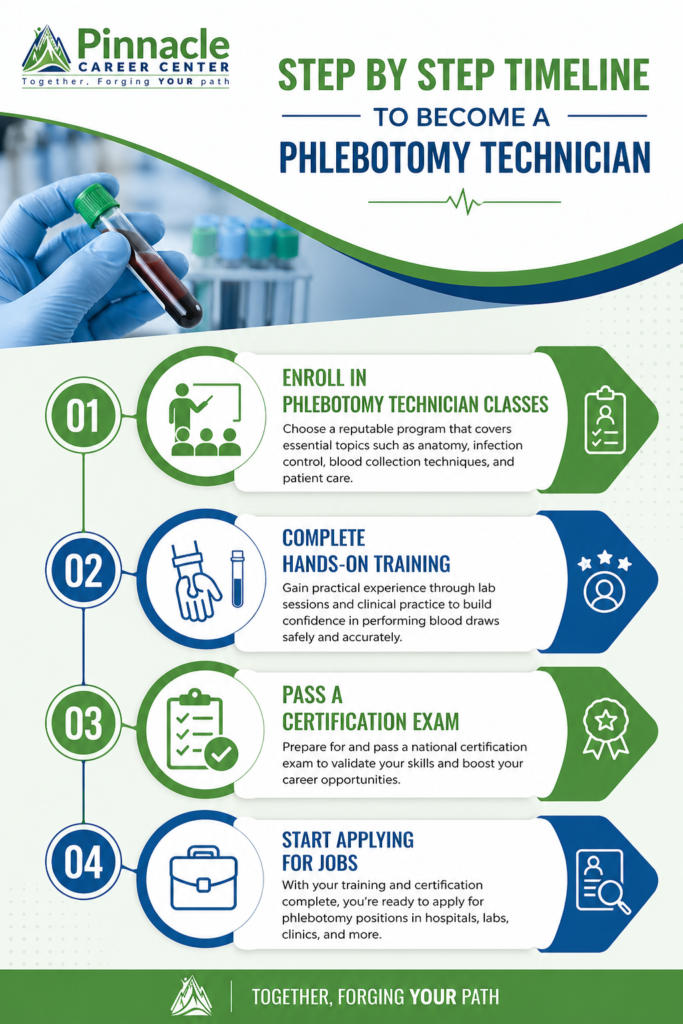
1. Enroll in Phlebotomy Technician Classes
The first step is joining a reputable phlebotomy technician course. These programs are designed to teach both theoretical knowledge and hands-on skills.
What You Learn in Training
- Anatomy and physiology basics
- Blood collection techniques
- Infection control and safety procedures
- Medical terminology
- Patient interaction and communication
Many phlebotomy technician training programs combine classroom instruction with lab practice.
2. Complete Hands-On Training
Hands-on practice is a key part of becoming job-ready. Most programs include clinical hours where you perform supervised blood draws.
Clinical Training Duration
- Usually ranges from 20 to 100 hours
- May be completed in a lab setting or real healthcare environment
This stage ensures you are confident and competent before entering the workforce.
3. Pass a Certification Exam
While not always required by law, certification is highly recommended and often preferred by employers.
Popular Certification Options
- National Healthcareer Association
- American Society for Clinical Pathology
- National Center for Competency Testing
Preparing for and passing the exam may take a few additional weeks, depending on your readiness.
4. Start Applying for Jobs
Once training and certification are complete, you can begin applying for entry-level positions. Many students start working immediately after finishing their program.
Factors That Affect How Long It Takes
Several factors can influence your timeline. Understanding these can help you choose the best path.
Type of Program
Accelerated programs move quickly, while more comprehensive courses may take longer but offer deeper training.
Full-Time vs Part-Time Schedule
Full-time students often complete their phlebotomy technician classes in weeks, while part-time students may take months.
State Requirements
Some states require additional certification or licensing, which can extend your timeline slightly.
Personal Learning Pace
Your ability to absorb information and practice skills efficiently also plays a role.
Fastest Way to Become a Phlebotomy Technician
If your goal is to enter the workforce quickly, there are ways to speed up the process.
Choose an Accelerated Program
Look for a phlebotomy technician course that offers intensive training over a short period, often completed in 4 to 6 weeks.
Stay Consistent
Attending classes regularly and practicing skills daily can help you finish faster.
Prepare for Certification Early
Start studying for your certification exam during your training program to avoid delays.
Benefits of Becoming a Phlebotomy Technician
This career path offers several advantages, especially for those seeking a quick entry into healthcare.
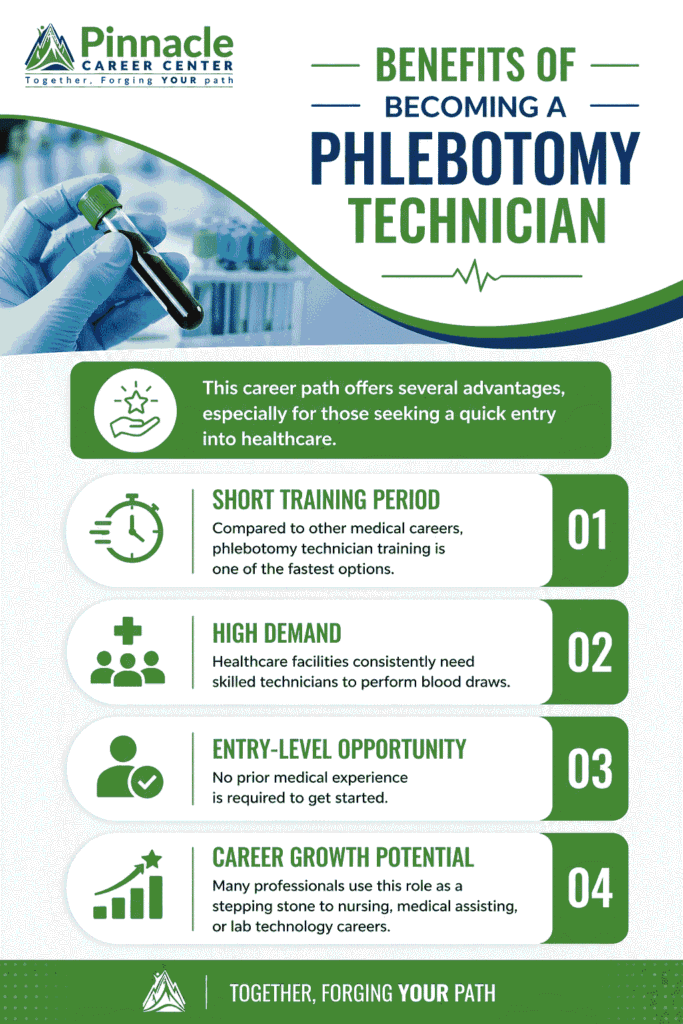
Short Training Period
Compared to other medical careers, phlebotomy technician training is one of the fastest options.
High Demand
Healthcare facilities consistently need skilled technicians to perform blood draws.
Entry-Level Opportunity
No prior medical experience is required to get started.
Career Growth Potential
Many professionals use this role as a stepping stone to nursing, medical assisting, or lab technology careers.
Is Certification Required?
Certification requirements vary by state, but most employers prefer certified candidates.
Why Certification Matters
- Increases job opportunities
- Demonstrates professional competence
- Builds employer trust
- May lead to higher pay
Even if your state does not require it, earning certification is a smart investment in your career.
How Much Do Phlebotomy Technician Classes Cost?
The cost of a phlebotomy technician course can vary depending on the institution and program length.
Typical Cost Range
- Basic programs: $500 to $1,500
- Comprehensive programs: $1,500 to $3,000
Some schools offer payment plans or financial assistance, making training more accessible.
Tips for Choosing the Right Training Program
Selecting the right program can impact both your timeline and career success.
Look for Accreditation
Ensure the program meets industry standards and prepares you for certification.
Check Clinical Opportunities
Hands-on training is essential for building confidence and skills.
Read Reviews
Student feedback can provide insight into program quality and instructor support.
Ask About Job Placement
Some schools help graduates find employment after completing training.
Choose Pinnacle Career Center For Phlebotomy Technician Certification
Pinnacle Career Center offers a hands-on Phlebotomy Technician course in San Antonio, TX designed to help you gain real skills and prepare for certification. Learn from experienced instructors, build confidence with practical training, and get job-ready fast. Enroll now to secure your spot and take the first step toward a rewarding future in healthcare.
Common Questions About Becoming a Phlebotomy Technician
Can You Become a Phlebotomy Technician in One Month?
Yes, some accelerated programs allow you to complete training in as little as 4 weeks. However, this requires full-time commitment.
Do You Need a Degree?
No, a degree is not required. A short-term phlebotomy technician training program is sufficient.
Is It Hard to Learn Phlebotomy?
Most students find it manageable, especially with hands-on practice and proper instruction.
Final Thoughts
So, how long does it take to become a phlebotomy technician? For most people, the journey takes anywhere from a few weeks to a few months. With the right phlebotomy technician classes, consistent effort, and proper preparation, you can quickly gain the skills needed to enter the healthcare field.
This career path offers a unique combination of speed, stability, and opportunity. Whether you are starting fresh or looking to transition into healthcare, becoming a phlebotomy technician is a practical and rewarding choice.