
What Qualifications Do You Need for Phlebotomy?
To become a phlebotomist, you usually need a high school diploma or GED, complete a phlebotomy training program, and earn certification from recognized organizations such as the American Society for Clinical Pathology (ASCP) or National Healthcareer Association (NHA). Some employers or states may also require additional licensing or clinical experience.
What Is Phlebotomy?
Phlebotomy is a healthcare skill focused on drawing blood from patients for medical testing, transfusions, donations, or research. It is a key role in hospitals, diagnostic labs, and clinics, where accuracy and patient care are equally important.
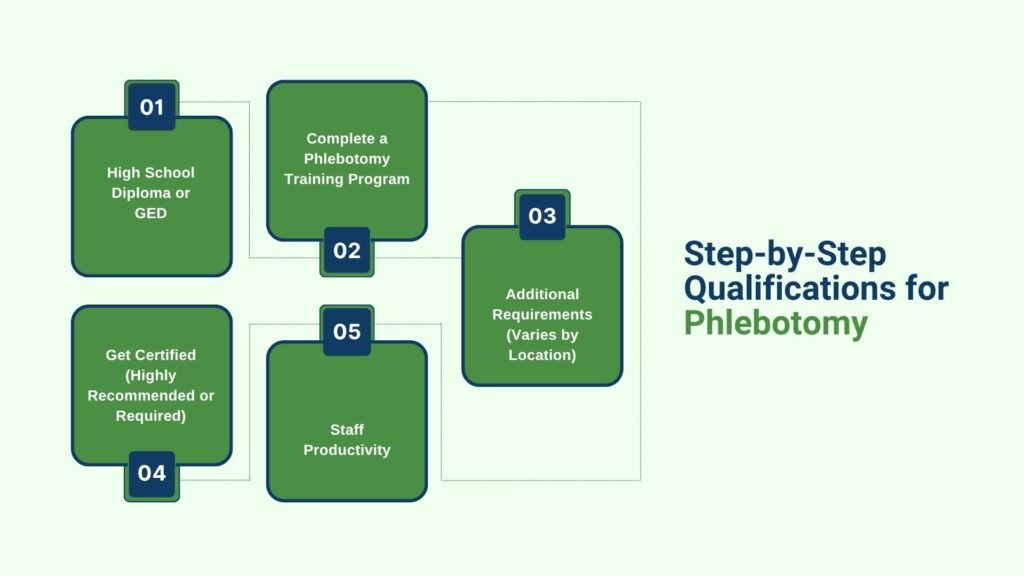
Step-by-Step Qualifications for Phlebotomy
1. High School Diploma or GED
The first basic requirement is completing high school or an equivalent qualification. This ensures you have foundational knowledge in biology, communication, and basic math, which are important for medical work.
2. Complete a Phlebotomy Training Program
After high school, you must enroll in a phlebotomy training program, usually offered by:
- Community colleges
- Vocational schools
- Healthcare training institutes
These programs typically last 4 weeks to 6 months depending on depth.
Related: How to Become a Phlebotomy Technician?
Training includes:
- Human anatomy (especially veins and circulatory system)
- Blood collection techniques (venipuncture, finger sticks)
- Infection control and safety procedures
- Patient communication and care
- Proper labeling and handling of samples
3. Hands-On Clinical Practice
Most programs include clinical hours where students practice blood draws under supervision. This is important because real-world experience builds confidence and reduces errors in patient care settings.
4. Get Certified (Highly Recommended or Required)
After training, most employers prefer or require certification. Common certifications include:
- American Medical Technologists (AMT)
- National Phlebotomy Association (NPA)
- ASCP certification (widely accepted in hospitals and labs)
- NHA certification (commonly used in healthcare facilities)
Certification proves that you have the technical skills and knowledge required to work safely with patients.
5. Additional Requirements (Varies by Location)
Depending on your state or employer, you may also need:
- Background check
- Immunization records (Hepatitis B, etc.)
- CPR certification
- State license (in some U.S. states)
Related: What does a phlebotomy technician do?
Skills You Need Beyond Qualifications
Phlebotomy is not only about technical training. Employers also look for strong soft skills such as:
- Attention to detail
- Calm behavior under pressure
- Good communication skills
- Compassion for patients (especially those afraid of needles)
- Ability to follow strict medical protocols
Final Thoughts
Phlebotomy is considered an entry-level healthcare career, but it still requires structured training and certification to ensure patient safety and accuracy. With the right education, hands-on practice, and certification, you can enter the field relatively quickly and build a stable healthcare career.
Pinnacle Career Center is now offering a Phlebotomy Course in San Antonio, TX designed to give you hands-on training, practical skills, and industry-recognized knowledge to enter the medical field with confidence.
Enroll now and take the first step toward becoming a certified phlebotomy professional.