Hands-On CPR Training: Why It’s Better Than Online-Only Courses
Instructor-led CPR classes gives students the practical experience and confidence needed to respond effectively during emergencies.
Table of Contents
What Is in-person CPR course?
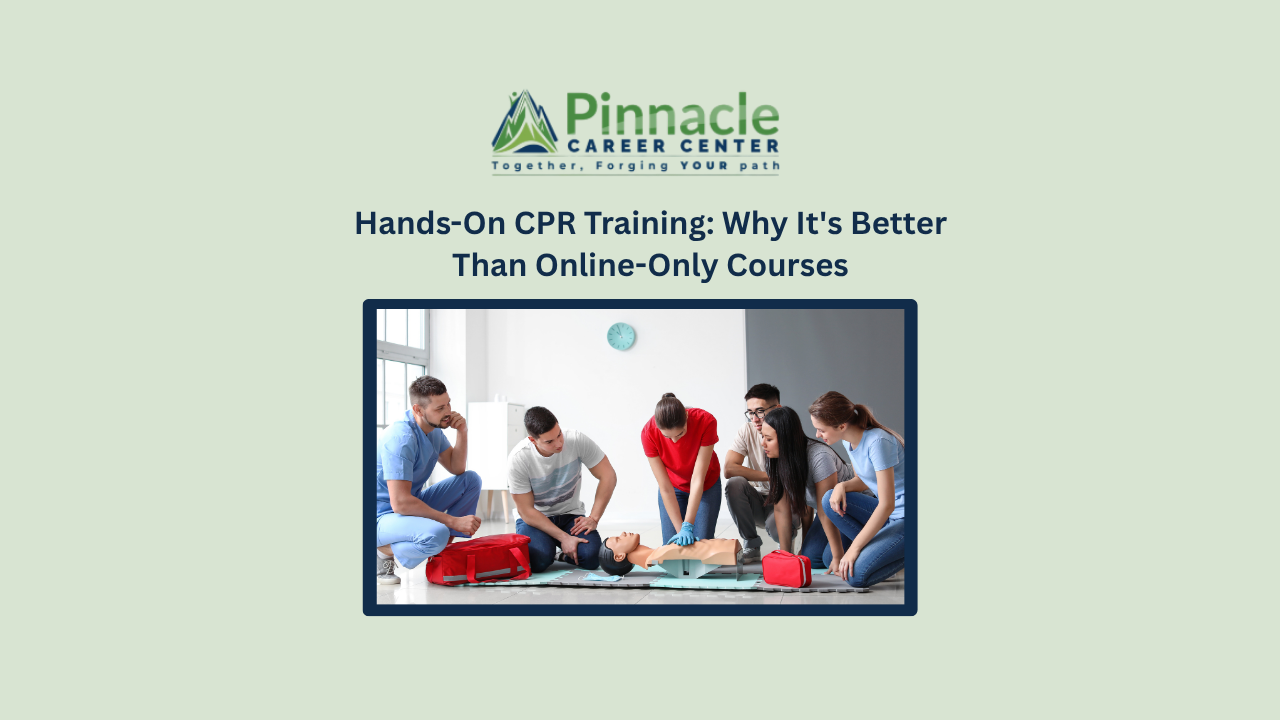
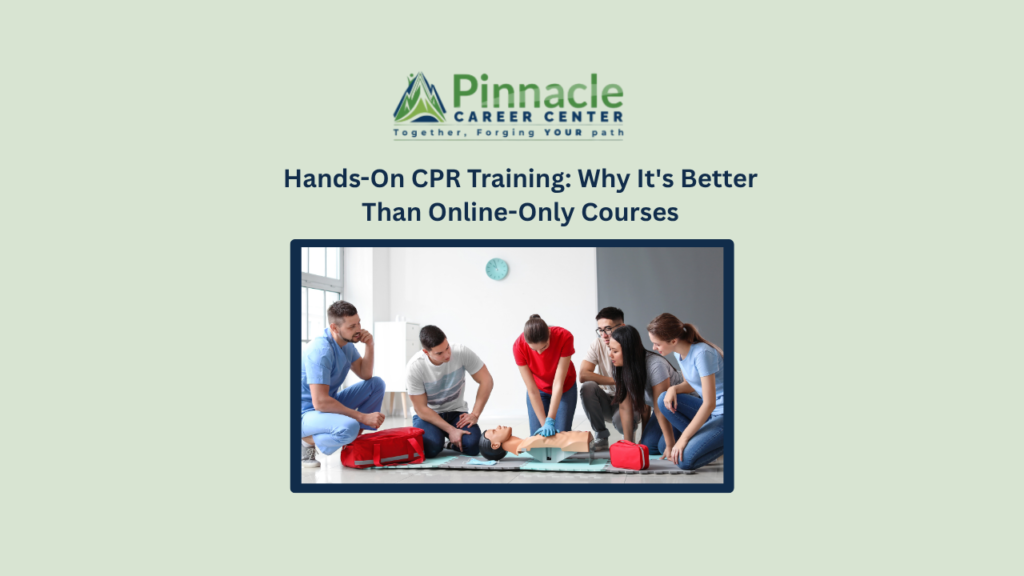
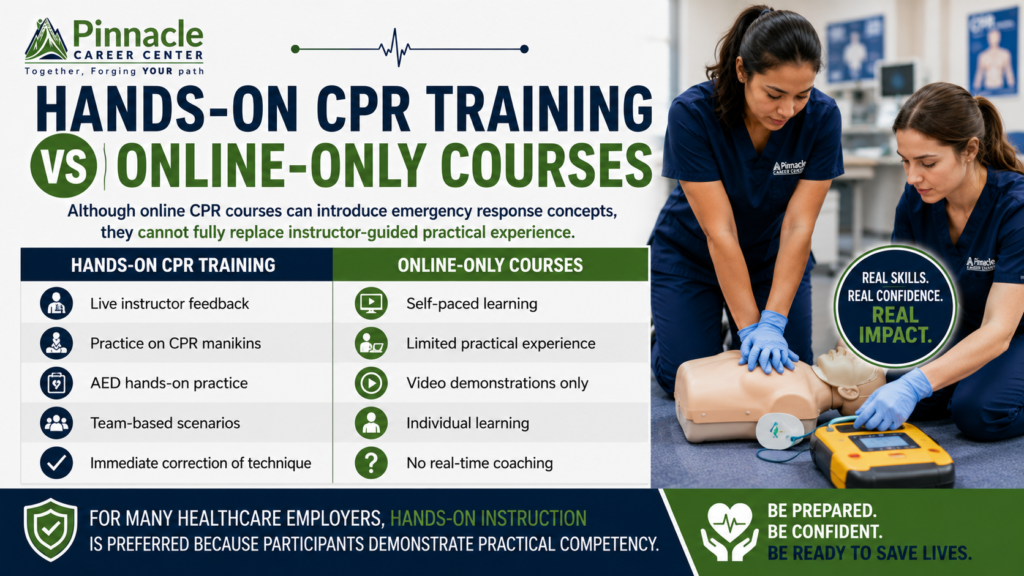
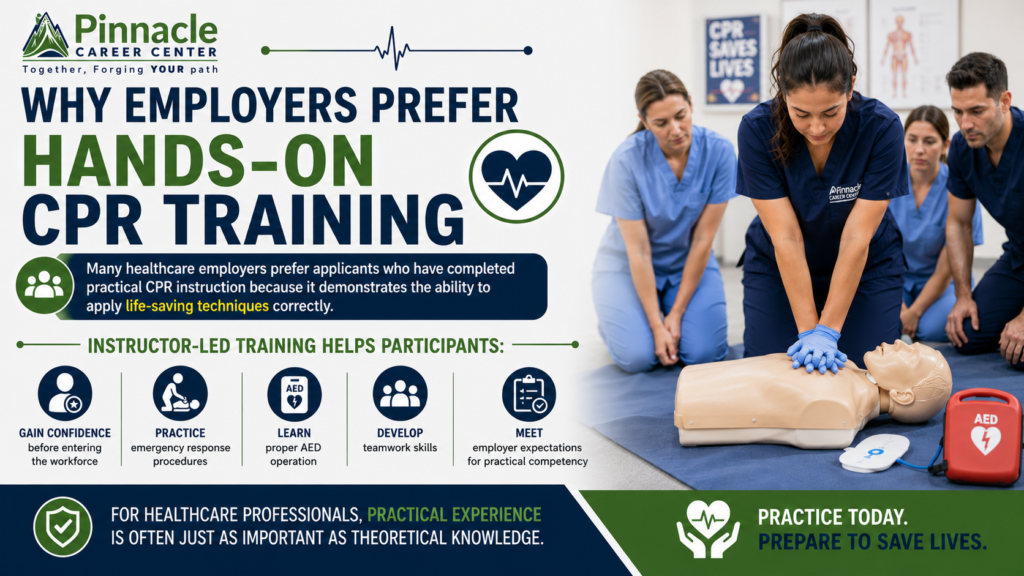
Hands-On CPR Training combines classroom instruction with practical skill development, giving students the opportunity to practice life-saving techniques under the supervision of qualified instructors. Instead of only watching instructional videos, participants perform CPR on training manikins, practice using an Automated External Defibrillator (AED), and receive immediate feedback to improve their technique.
Learning CPR through practical instruction helps students develop confidence, improve muscle memory, and prepare for real-life emergencies. Whether you are pursuing a healthcare career or simply want to be ready to help during an emergency, hands-on practice provides valuable experience that online-only learning cannot fully replicate.
Why Practical Experience Makes a Difference
During a cardiac emergency, every second matters. Knowing the correct CPR steps is important, but having the confidence to perform them under pressure is equally essential.
Hands-on learning allows students to:
- Practice proper hand placement
- Learn the correct compression depth and rate
- Perform rescue breaths correctly
- Respond to realistic emergency scenarios
- Build confidence through repetition
Receiving guidance from experienced instructors helps students correct mistakes immediately and develop skills that are difficult to master through online instruction alone.
Ready to Learn Life-Saving Skills?
If you’re looking to build practical emergency response skills, Pinnacle Career Center offers instructor-led CPR classes designed to prepare students for certification and real-world situations.
👉 Contact our Admissions Team to learn about upcoming CPR classes and enrollment opportunities.
Skills You Learn During classroom CPR education
Students completing a quality CPR course develop skills that prepare them to respond during life-threatening emergencies.
Training typically includes:
- Recognizing cardiac arrest
- Performing high-quality CPR for adults, children, and infants
- Using an Automated External Defibrillator (AED)
- Providing rescue breaths
- Responding to choking emergencies
- Understanding the Chain of Survival
- Working effectively during multi-rescuer CPR
These practical skills are valuable in healthcare settings, workplaces, schools, and everyday life
Who Should Take in-person CPR course?
Hands-on CPR instruction benefits individuals in many different professions and life situations.
Recommended for:
- Certified Nursing Assistants (CNAs)
- Medical Assistants
- Nurses
- Dental professionals
- Teachers
- Childcare providers
- Coaches
- Fitness instructors
- Lifeguards
- Parents
- Caregivers
- Community volunteers
Anyone who wants to be prepared to respond during an emergency can benefit from CPR education.
Explore More Healthcare Training
Interested in starting a healthcare career?
Read our related guide: How to Become a Certified Nursing Assistant in Texas: Proven Guide to a Successful Career in 2026.
Learning CPR is an excellent complement to many healthcare training programs.
Why Choose Pinnacle Career Center?
At Pinnacle Career Center, students receive high-quality CPR instruction in a supportive learning environment.
Our CPR classes include:
- Experienced instructors
- Hands-on practice
- AED instruction
- Realistic emergency scenarios
- Career-focused healthcare education
- Preparation for certification
We are committed to helping students develop the knowledge and confidence needed to respond effectively during emergencies.es.
Advance Your Healthcare Career
CPR certification is often required for healthcare employment and demonstrates your commitment to patient safety.
👉 Speak with our admissions team to learn how CPR training can support your career goals.
FAQs
Is Hands-On CPR Training better than online-only courses?
Hands-on instruction allows participants to practice CPR skills, receive instructor feedback, and develop confidence through real-world scenarios.
Does Hands-On CPR Training include AED practice?
Yes. Students learn how to safely operate an Automated External Defibrillator (AED) during practical training.
Who should complete CPR certification?
Healthcare professionals, teachers, childcare providers, fitness instructors, parents, caregivers, and anyone interested in emergency preparedness.
How long does CPR certification remain valid?
Certification requirements vary by organization, but many CPR certifications are valid for approximately two years before renewal.
Final Thoughts
Learning CPR is about more than earning a certification—it is about gaining the confidence and skills to help save a life. While online courses provide helpful background information, Hands-On CPR Training gives students the opportunity to practice essential techniques, receive professional guidance, and prepare for real emergencies.
Whether your goal is to begin a healthcare career or simply become better prepared to help others, practical CPR instruction is a valuable investment in your future.
Related Articles –
American Heart Association. Basic Life Support (BLS).