
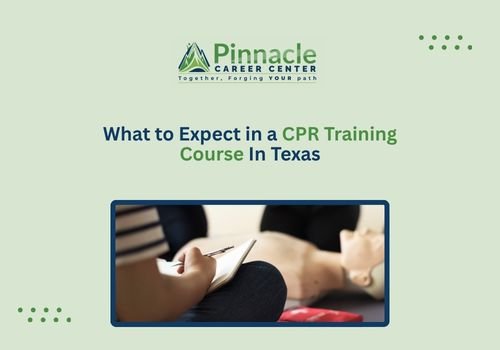
What to Expect in a CPR Training Course In Texas
Cardiac emergencies can happen anywhere at home, at work, in schools, gyms, healthcare facilities, or public spaces. In those critical moments, knowing how to respond can make a life-saving difference. If you’re considering enrolling in a CPR Course, understanding what you’ll learn and how the training works can help you feel more prepared and confident before your first class.
Whether you’re pursuing CPR Certification for employment, healthcare training, workplace compliance, or personal preparedness, this guide explains exactly what to expect in a CPR training course in Texas, from classroom instruction and hands-on practice to skills testing and certification requirements.
What Is a CPR Training Course?
A CPR (Cardiopulmonary Resuscitation) training course teaches individuals how to recognize and respond to cardiac and breathing emergencies. Participants learn evidence-based techniques that help maintain blood circulation and oxygen flow until professional medical help arrives.
Most CPR courses cover:
- Adult CPR
- Child CPR
- Infant CPR
- Automated External Defibrillator (AED) use
- Choking response procedures
- Emergency assessment and scene safety
The exact curriculum may vary depending on the course level and intended audience, such as healthcare providers, workplace employees, teachers, caregivers, or community members.
Quick Answer: What Should You Expect During CPR Training?
A typical CPR training course in Texas includes:
- Learning emergency response fundamentals
- Understanding cardiac arrest and choking emergencies
- Practicing chest compressions on training manikins
- Learning rescue breathing techniques
- Using an AED trainer device
- Completing hands-on skills assessments
- Receiving CPR Certification upon successful completion
Most courses can be completed in a few hours, although advanced healthcare-focused programs may require additional training time.
Why CPR Training Matters
Every year, thousands of people experience sudden cardiac arrest outside of hospitals. Immediate CPR can significantly improve survival outcomes while emergency medical services are on the way.
Benefits of CPR training include:
- Increased confidence during emergencies
- Faster response times
- Improved workplace safety
- Enhanced healthcare career opportunities
- Greater community preparedness
- Compliance with employer requirements
For many healthcare, education, childcare, and public service roles, maintaining an active CPR Certification is often mandatory.
Read More: Why CPR Certification Is Important for Healthcare Professionals
Who Should Take a CPR Course?
CPR training is valuable for nearly anyone, but it is especially beneficial for:
Healthcare Professionals
- Nursing assistants
- Medical assistants
- Nurses
- EMTs
- Home health aides
- Medical students
Education and Childcare Workers
- Teachers
- Daycare staff
- School personnel
- Camp counselors
Workplace Employees
- Construction workers
- Security personnel
- Fitness trainers
- Manufacturing employees
- Corporate staff
Community Members
- Parents
- Caregivers
- Coaches
- Volunteers
- Family members of high-risk individuals
What Topics Are Covered in a CPR Training Course?
While course content may vary slightly, most programs cover the following core subjects.
Emergency Scene Assessment
Before providing assistance, participants learn how to:
- Assess the environment for safety
- Protect themselves and the victim
- Determine responsiveness
- Activate emergency medical services
- Request additional assistance
Understanding scene safety is a critical first step in every emergency response.
Recognizing Cardiac Arrest
Participants learn how to identify common signs of cardiac arrest, including:
- Unresponsiveness
- Absence of normal breathing
- Gasping respirations
- Lack of pulse (for healthcare-level courses)
Rapid recognition helps reduce delays in treatment.
Adult CPR Techniques
Adult CPR is typically one of the largest components of training.
Students practice:
- Correct hand placement
- Proper compression depth
- Appropriate compression rate
- Full chest recoil
- Minimizing interruptions
Hands-on practice allows participants to develop muscle memory and confidence.
Child CPR Procedures
Children require modified CPR techniques due to their size and anatomy.
Training includes:
- Compression adjustments
- Pediatric emergency considerations
- Age-specific response guidelines
Infant CPR Skills
Infant CPR differs significantly from adult CPR.
Students learn:
- Infant chest compression methods
- Airway management techniques
- Rescue breathing procedures
- Infant choking response
Many parents and childcare providers find this section particularly valuable.
AED Training
Automated External Defibrillators are increasingly available in public spaces throughout Texas.
Participants learn how to:
- Operate an AED safely
- Follow voice prompts
- Apply electrode pads correctly
- Coordinate CPR with defibrillation
AED training is now a standard component of many CPR courses.
Choking Emergency Response
Airway obstruction emergencies require immediate action.
Students practice:
- Identifying choking symptoms
- Performing abdominal thrusts
- Assisting adults, children, and infants
- Responding to unconscious choking victims
Hands-On Practice: The Most Important Part of Training
One aspect many students underestimate is the amount of practical training involved.
Most CPR courses include:
- Manikin-based practice sessions
- Realistic emergency scenarios
- Instructor-guided demonstrations
- Peer practice exercises
- Skills performance evaluations
Hands-on learning helps participants retain information more effectively than lecture-based instruction alone.
What You’ll Practice Repeatedly
Compression Technique
Students focus on:
- Correct depth
- Proper rhythm
- Hand positioning
- Body mechanics
Rescue Breathing
Training emphasizes:
- Airway opening
- Effective ventilation
- Proper timing
Team-Based Response
Some courses simulate multi-rescuer situations where participants practice coordinating emergency care.
CPR Course Types Available in Texas
Different learners have different training needs.
| Course Type | Best For | Typical Coverage |
|---|---|---|
| Basic CPR | General public | CPR, AED, choking response |
| Workplace CPR | Employees | CPR and workplace emergency response |
| Healthcare Provider CPR | Medical professionals | Advanced CPR skills and team response |
| Pediatric CPR | Childcare professionals | Child and infant emergencies |
| Blended Learning CPR | Flexible learners | Online learning plus hands-on skills session |
Choosing the correct course depends on your career goals and certification requirements.
How Long Does CPR Training Take in Texas?
Training duration varies depending on the program.
Typical Course Lengths
| Course Level | Approximate Duration |
| Basic CPR | 2–4 hours |
| CPR and AED | 3–5 hours |
| Healthcare Provider Training | 4–8 hours |
| Blended Learning Programs | Varies by online completion time |
Many students are surprised by how efficiently the training is structured.
What Should You Bring to Class?
Most CPR courses require very little preparation.
CPR Training Checklist
✔ Valid photo identification
✔ Registration confirmation
✔ Comfortable clothing
✔ Notebook (optional)
✔ Water bottle
✔ Positive attitude and willingness to participate
Because practical exercises are involved, comfortable clothing is recommended.
How Is CPR Certification Earned?
To receive certification, participants typically must:
- Attend the required training session
- Participate in hands-on practice
- Demonstrate CPR skills competency
- Successfully complete any required assessments
Upon completion, students receive a CPR Certification card or digital credential that verifies successful training.
Common Mistakes First-Time Students Make
Being aware of these challenges can improve your learning experience.
Not Practicing Compression Depth
Proper compression depth is essential for effective CPR.
Rushing Through Skills
Taking time to learn correct technique often leads to better long-term retention.
Ignoring AED Training
Many learners focus only on compressions and underestimate the importance of AED use.
Being Nervous About Assessments
Most CPR instructors are focused on teaching and coaching, not creating unnecessary pressure.
How CPR Training Supports Healthcare Career Goals
For individuals entering healthcare fields, CPR Certification is often one of the first professional credentials obtained.
Employers frequently require CPR certification for:
- Certified Nursing Assistants (CNAs)
- Medical assistants
- Home health aides
- Patient care technicians
- Nursing students
Completing training demonstrates commitment to patient safety and emergency preparedness.
At Pinnacle Career Center, many students pursuing healthcare education begin by obtaining essential life-saving skills that support both career readiness and community safety.
Key Takeaways
- CPR training teaches life-saving emergency response skills.
- Most courses include CPR, AED use, and choking response.
- Hands-on practice is a major component of training.
- Students learn adult, child, and infant CPR techniques.
- Certification is earned after successful participation and skills evaluation.
- CPR skills can benefit healthcare professionals, workplace employees, caregivers, and community members alike.
FAQs:
How long is CPR certification valid in Texas?
Most CPR certifications remain valid for two years, although requirements can vary by employer, industry, or certifying organization.
Do CPR courses include AED training?
Yes. Most modern CPR courses include AED instruction because early defibrillation is an important component of emergency cardiac care.
Can beginners take a CPR course?
Absolutely. Most entry-level CPR classes are designed for individuals with no previous medical experience.
Is hands-on practice required?
Yes. Practical skills training is a core requirement for most CPR certification programs and helps ensure participants can perform CPR correctly during real emergencies.
What should I wear to CPR class?
Comfortable clothing is recommended because students spend time practicing chest compressions and other hands-on emergency response skills.
Is CPR training difficult?
Most students find CPR training straightforward when guided by qualified instructors. The course focuses on practical skills, repetition, and confidence-building rather than complex medical knowledge.
Final Thoughts
Knowing what to expect in a CPR training course in Texas can help you approach training with confidence and realistic expectations. From learning emergency assessment and CPR techniques to practicing AED use and choking response, each component is designed to prepare you for real-world emergencies.
Whether you’re pursuing a healthcare career, meeting workplace requirements, or simply wanting to help others during a crisis, completing a CPR Course is a valuable investment in both personal preparedness and community safety. If you’re ready to build life-saving skills and earn your CPR Certification, consider enrolling in a reputable training program that offers hands-on instruction, experienced educators, and nationally recognized credentials.
Ready to Learn Life-Saving Skills?
Whether you’re starting a healthcare career, meeting workplace requirements, or preparing to respond confidently during emergencies, CPR training is an essential skill that can make a real difference when every second counts.
Pinnacle Career Center provides comprehensive CPR Training Courses in Texas designed to help students gain hands-on experience, build confidence, and earn their CPR Certification through expert-led instruction.
Take the next step toward becoming emergency-ready. Enroll now and learn the skills that can help save a life when it matters most.