Complete Guide to CPR Course and Certification: Everything You Need to Know in 2026
Cardiopulmonary Resuscitation (CPR) is one of the most valuable emergency response skills a person can learn. In critical situations such as sudden cardiac arrest, choking, drowning, or breathing emergencies, CPR can help maintain blood circulation and oxygen flow until professional medical help arrives.
Today, CPR certification is not only important for healthcare professionals but also for teachers, parents, fitness trainers, caregivers, workplace employees, and anyone who wants to be prepared during a medical emergency.
This complete guide explains everything you need to know about CPR courses and certification, including training types, certification requirements, course duration, online vs in-person training, costs, renewal process, and career benefits.
What Is a CPR Course?
A CPR course is a structured training program designed to teach individuals how to respond during cardiac and breathing emergencies. These courses combine theoretical knowledge with hands-on practical training to help participants perform CPR safely and effectively.
Most CPR training programs cover:
- Chest compressions
- Rescue breathing
- Automated External Defibrillator (AED) use
- Emergency response procedures
- Adult, child, and infant CPR techniques
- Choking relief methods
Many CPR certification courses also include basic first aid and emergency preparedness training.
Why CPR Certification Matters
CPR certification demonstrates that an individual has completed professional CPR training and understands proper life-saving techniques.
Key Benefits of CPR Certification
Helps Save Lives
Immediate CPR can significantly increase survival rates during sudden cardiac arrest before emergency responders arrive.
Builds Emergency Confidence
CPR training helps individuals stay calm and respond effectively during high-pressure situations.
Career and Employment Benefits
Many employers require CPR certification for roles in:
- Healthcare
- Childcare
- Fitness and sports
- Education
- Public safety
- Home healthcare
Workplace Safety Compliance
Businesses often provide workplace CPR training to improve employee safety and emergency preparedness.
Types of CPR Certification Courses
Different CPR courses are designed for different skill levels and professions.
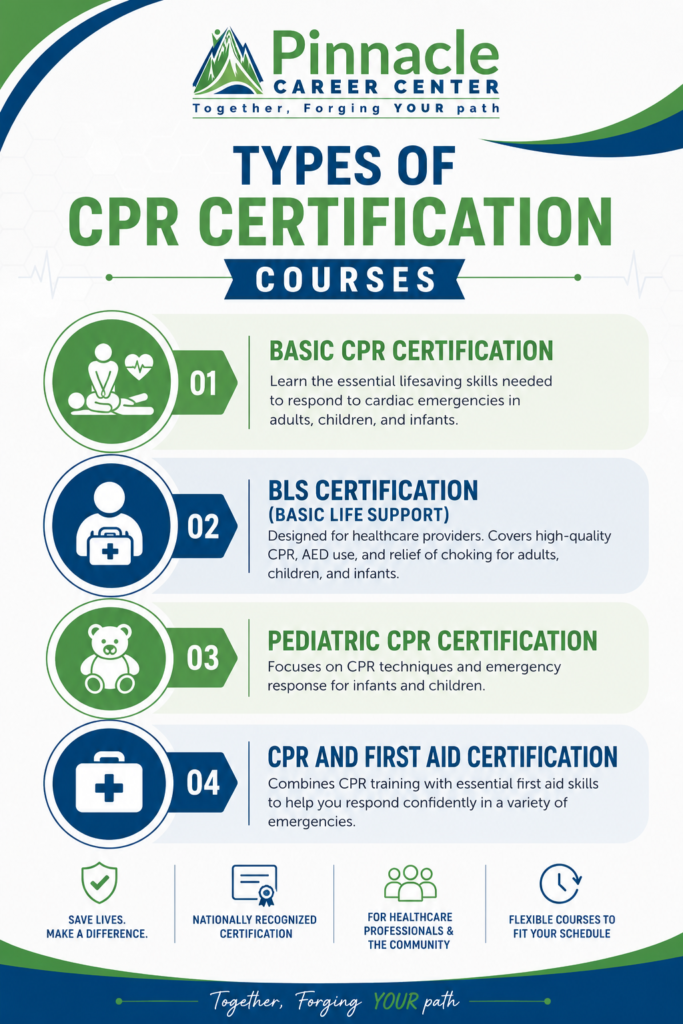
Basic CPR Certification
Ideal for:
- General public
- Parents
- Teachers
- Babysitters
- Community volunteers
Topics typically include:
- Adult CPR
- Child CPR
- AED basics
- Choking response
BLS Certification (Basic Life Support)
Designed for:
- Nurses
- Doctors
- EMTs
- Medical assistants
- Healthcare providers
BLS courses include:
- Team-based resuscitation
- Advanced emergency response
- Healthcare-specific CPR protocols
Pediatric CPR Certification
Focused on:
- Infants
- Children
- Pediatric emergencies
Recommended for:
- Daycare workers
- School staff
- Parents
- Pediatric healthcare professionals
CPR and First Aid Certification
Combines:
- CPR training
- First aid response
- Injury management
- Emergency care basics
Useful for workplaces, schools, and community organizations.
What You Learn in a CPR Training Course
A professional CPR training course teaches both theory and practical skills.
Core CPR Skills Covered
| Training Area | Description |
|---|---|
| Chest Compressions | Proper compression depth and rhythm |
| Rescue Breathing | Delivering breaths safely |
| AED Usage | Operating automated external defibrillators |
| Choking Relief | Assisting conscious and unconscious victims |
| Emergency Assessment | Recognizing cardiac emergencies |
| Team Response | Coordinating during medical emergencies |
Hands-on practice sessions help participants develop muscle memory and confidence.
Online CPR Certification vs In-Person Training
Many organizations now offer online CPR certification courses, but understanding the differences is important.
Online CPR Courses
Advantages
- Flexible scheduling
- Learn at your own pace
- Convenient for busy professionals
- Lower travel requirements
Limitations
- Limited hands-on practice
- Some employers may require practical assessment
In-Person CPR Training
Advantages
- Hands-on skill development
- Real-time instructor feedback
- Better emergency simulation experience
- Often preferred for healthcare roles
Limitations
- Fixed schedules
- Classroom attendance required
How Long Does CPR Certification Last?
Most CPR certifications remain valid for:
- 1 year
- 2 years
The exact duration depends on:
- Certification provider
- Course type
- Employer requirements
CPR skills can weaken over time, which is why renewal training is recommended regularly.
CPR Renewal and Recertification
CPR renewal courses help individuals refresh life-saving skills and stay updated with the latest emergency response guidelines.
Why CPR Recertification Is Important
- Maintains certification validity
- Updates current CPR techniques
- Improves emergency response accuracy
- Ensures workplace compliance
Many professionals complete CPR recertification before their certification expires.
Who Should Take a CPR Course?
CPR training is beneficial for almost everyone.
Recommended for:
- Healthcare professionals
- Teachers and school staff
- Coaches and fitness trainers
- Parents and caregivers
- Security personnel
- Construction workers
- Lifeguards
- Corporate employees
Even individuals without medical backgrounds can benefit from CPR certification training.
How Much Does a CPR Certification Course Cost?
The cost of CPR certification varies depending on:
- Training provider
- Course level
- Location
- Online or classroom format
Average CPR Course Costs
| Course Type | Estimated Cost |
|---|---|
| Basic CPR Course | $40–$100 |
| CPR + First Aid | $60–$150 |
| BLS Certification | $70–$200 |
| Pediatric CPR | $50–$120 |
Some employers and organizations may provide free or discounted CPR training programs.
How to Choose the Right CPR Training Provider
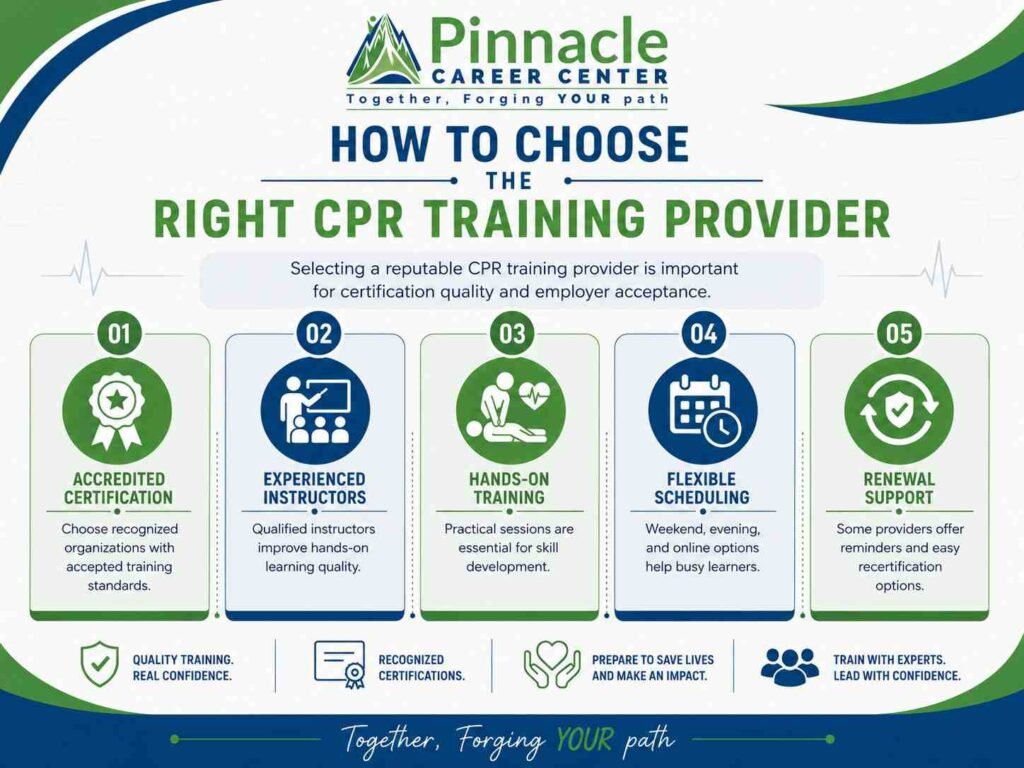
Selecting a reputable CPR training provider is important for certification quality and employer acceptance.
Look for These Features
Accredited Certification
Choose recognized organizations with accepted training standards.
Experienced Instructors
Qualified instructors improve hands-on learning quality.
Hands-On Training
Practical sessions are essential for skill development.
Flexible Scheduling
Weekend, evening, and online options help busy learners.
Renewal Support
Some providers offer reminders and easy recertification options.
Common CPR Mistakes to Avoid
Even trained individuals can make mistakes during emergencies.
Common CPR Errors
- Incorrect compression depth
- Improper hand placement
- Delayed emergency response
- Forgetting to call emergency services
- Inconsistent compression rhythm
Regular CPR practice and recertification help reduce these mistakes.
The Importance of AED Training
An Automated External Defibrillator (AED) is often used alongside CPR during cardiac emergencies.
AED training teaches participants:
- How to operate the device
- Safety precautions
- Proper pad placement
- Following voice prompts
Many modern CPR certification courses include AED instruction.
Career Opportunities With CPR Certification
CPR certification can improve employability in many industries.
Careers That Often Require CPR Certification
- Nursing
- Emergency medical services
- Home healthcare
- Physical therapy
- Childcare services
- Fitness instruction
- Occupational health
- Public safety roles
Employers often prioritize candidates with active CPR and first aid certification.
FAQs:
How long does it take to complete a CPR course?
Most CPR courses take between 2 and 6 hours depending on the certification level and training format.
Can I get CPR certified online?
Yes, many organizations offer online CPR certification programs. However, some employers may require hands-on practical training.
Is CPR certification required for healthcare workers?
Yes, many healthcare positions require active CPR or BLS certification as part of employment requirements.
What is the difference between CPR and BLS certification?
CPR certification focuses on basic life-saving techniques, while BLS certification includes advanced emergency response skills for healthcare providers.
How often should CPR certification be renewed?
Most CPR certifications should be renewed every 1–2 years to maintain skill accuracy and certification validity.
Does CPR certification include AED training?
Many CPR certification courses include AED training as part of the emergency response curriculum.
Final Thoughts
Learning CPR is more than just earning a certification, it is gaining the ability to respond confidently during life-threatening emergencies. Whether you are a healthcare professional, teacher, parent, or workplace employee, CPR training provides essential life-saving knowledge that can make a real difference.
Choosing the right CPR course and certification program ensures you receive proper training, practical experience, and recognized credentials that support both personal preparedness and professional growth.
If you are looking for professional CPR training in San Antonio, TX, Pinnacle Career Center offers CPR courses designed to help students, healthcare professionals, caregivers, and community members gain essential life-saving skills. Enroll today to receive hands-on training, build emergency response confidence, and earn your CPR certification from experienced instructors at Pinnacle Career Center.