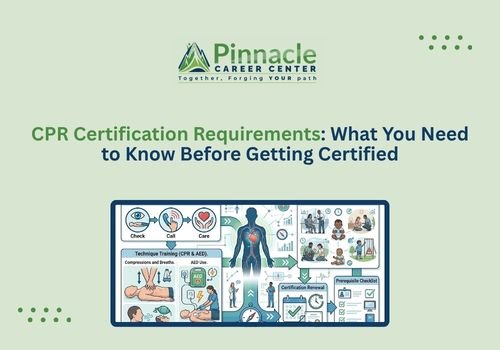
CPR Certification Requirements: What You Need to Know Before Getting Certified
Cardiac emergencies can happen anywhere at work, in schools, hospitals, gyms, airports, or even at home. In those first critical minutes before emergency responders arrive, CPR can significantly improve survival chances. That’s why CPR certification has become an essential requirement in many healthcare and non-healthcare professions.
Whether you are entering the medical field, renewing an expired credential, or simply learning lifesaving skills for personal preparedness, understanding CPR certification requirements helps you choose the right training path and stay compliant with employer or state expectations.
This guide explains who needs CPR certification, common training requirements, certification types, renewal timelines, course formats, costs, and how to select a trusted training provider like Pinnacle Career Center.
What Is CPR Certification?
CPR certification is an official credential showing that a person has completed approved training in Cardiopulmonary Resuscitation (CPR) and emergency response techniques.
A CPR certification course typically teaches:
- Chest compressions
- Rescue breathing
- AED (Automated External Defibrillator) usage
- Adult, child, and infant CPR
- Choking response techniques
- Emergency scene assessment
Most CPR certifications are issued after successfully completing a CPR Course that includes hands-on skills practice and an assessment.
Why CPR Certification Matters
CPR training is more than a workplace requirement. It is a practical skill that can save lives during cardiac arrest, drowning incidents, respiratory emergencies, or choking situations.
Key Benefits of CPR Certification
- Improves emergency response confidence
- Helps meet employer compliance standards
- Supports healthcare career advancement
- Enhances workplace safety
- Prepares parents, teachers, and caregivers for emergencies
- Increases survival rates during sudden cardiac arrest situations
Healthcare employers often prioritize candidates with current CPR credentials because emergency readiness is essential in patient care settings.
Who Needs CPR Certification?
CPR certification requirements vary by profession, employer, and state regulations. Some careers legally require certification, while others strongly recommend it.
Common Professions Requiring CPR Certification
| Profession | CPR Certification Typically Required? |
|---|---|
| Nurses | Yes |
| Certified Nursing Assistants (CNAs) | Yes |
| Medical Assistants | Yes |
| EMTs & Paramedics | Yes |
| Dental Assistants | Often |
| Childcare Providers | Usually |
| Teachers & Coaches | Frequently |
| Fitness Trainers | Commonly |
| Lifeguards | Yes |
| Home Health Aides | Often |
Many hospitals, long-term care facilities, rehabilitation centers, and outpatient clinics require employees to maintain active CPR credentials throughout employment.
CPR Certification Requirements Explained
The exact CPR certification requirements depend on the course type and intended use. However, most programs include several core requirements.
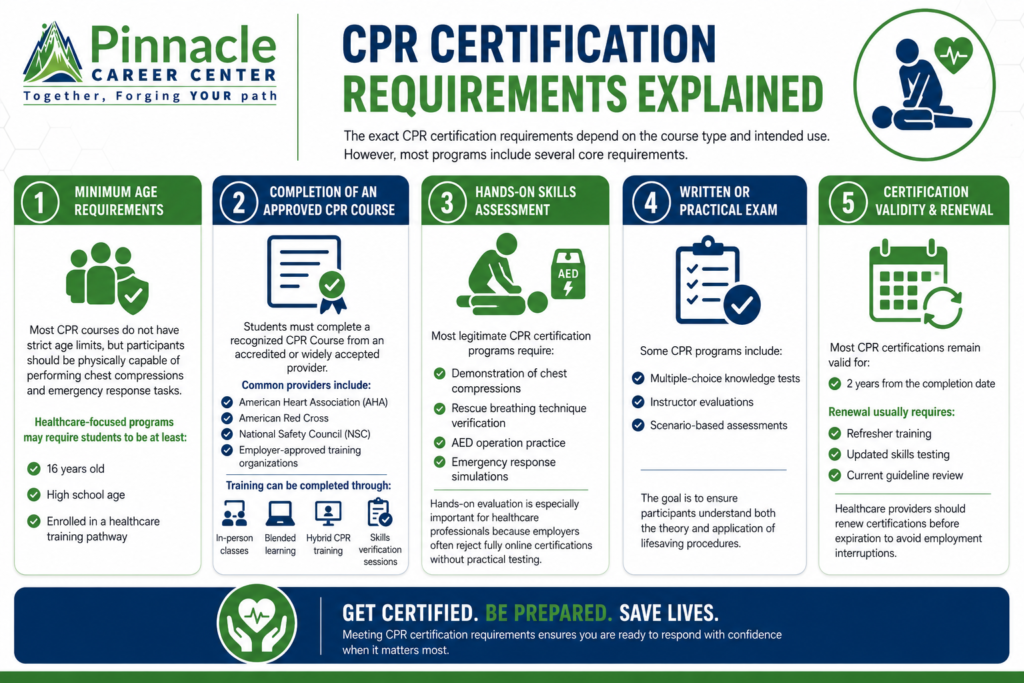
1. Minimum Age Requirements
Most CPR courses do not have strict age limits, but participants should be physically capable of performing chest compressions and emergency response tasks.
Healthcare-focused programs may require students to be at least:
- 16 years old
- High school age
- Enrolled in a healthcare training pathway
2. Completion of an Approved CPR Course
Students must complete a recognized CPR Course from an accredited or widely accepted provider.
Common providers include:
- American Heart Association (AHA)
- American Red Cross
- National Safety Council (NSC)
- Employer-approved training organizations
Training can be completed through:
- In-person classes
- Blended learning
- Hybrid CPR training
- Skills verification sessions
3. Hands-On Skills Assessment
Most legitimate CPR certification programs require:
- Demonstration of chest compressions
- Rescue breathing technique verification
- AED operation practice
- Emergency response simulations
Hands-on evaluation is especially important for healthcare professionals because employers often reject fully online certifications without practical testing.
4. Written or Practical Exam
Some CPR programs include:
- Multiple-choice knowledge tests
- Instructor evaluations
- Scenario-based assessments
The goal is to ensure participants understand both the theory and application of lifesaving procedures.
5. Certification Validity & Renewal
Most CPR certifications remain valid for:
- 2 years from the completion date
Renewal usually requires:
- Refresher training
- Updated skills testing
- Current guideline review
Healthcare providers should renew certifications before expiration to avoid employment interruptions.
Types of CPR Certifications
Different CPR certifications are designed for different roles and experience levels.
Basic CPR Certification
Ideal for:
- Parents
- Teachers
- Office workers
- Community members
Typically covers:
- Adult CPR
- AED usage
- Choking response
BLS Certification (Basic Life Support)
Designed for healthcare professionals, including:
- Nurses
- CNAs
- Medical students
- EMTs
Includes:
- Team-based resuscitation
- Advanced emergency response
- High-performance CPR
- Infant and pediatric care
BLS certification is one of the most requested healthcare CPR credentials.
Pediatric CPR Certification
Focused on:
- Infants
- Children
- Childcare emergencies
Commonly required for:
- Daycare staff
- Pediatric clinics
- School personnel
- Babysitters
Online vs In-Person CPR Certification
Many students wonder whether online CPR certification meets employer requirements.
| Feature | Online CPR | In-Person CPR |
|---|---|---|
| Flexibility | High | Moderate |
| Hands-On Practice | Limited | Extensive |
| Employer Acceptance | Varies | Widely Accepted |
| Skills Testing | Sometimes Missing | Included |
| Best For | General knowledge | Healthcare careers |
Important Tip
If you work in healthcare, always confirm whether your employer accepts online-only certification before enrolling.
Many hospitals specifically require:
- Instructor-led training
- In-person skills validation
- AHA-compliant CPR programs
How Long Does CPR Certification Take?
Most CPR certification classes can be completed in:
- 2–6 hours for basic CPR
- 4–8 hours for BLS training
- Longer for advanced emergency certifications
Hybrid learning options may reduce classroom time by allowing students to complete theory modules online first.
How Much Does CPR Certification Cost?
Pricing varies depending on:
- Course type
- Certification provider
- Training format
- Location
Average CPR Certification Costs
| Course Type | Average Cost |
|---|---|
| Basic CPR | $40–$90 |
| CPR + AED | $60–$120 |
| BLS Certification | $70–$150 |
| Pediatric CPR | $50–$100 |
Some employers reimburse certification expenses for healthcare workers.
What Employers Look for in CPR Certification
Many people complete CPR training only to discover their employer does not recognize the credential.
Before Enrolling, Verify:
- Certification provider acceptance
- Expiration requirements
- In-person skills testing requirements
- BLS vs standard CPR expectations
- Digital certification card availability
Healthcare facilities commonly prefer training aligned with current resuscitation guidelines and nationally recognized organizations.
Common Mistakes People Make When Getting CPR Certified
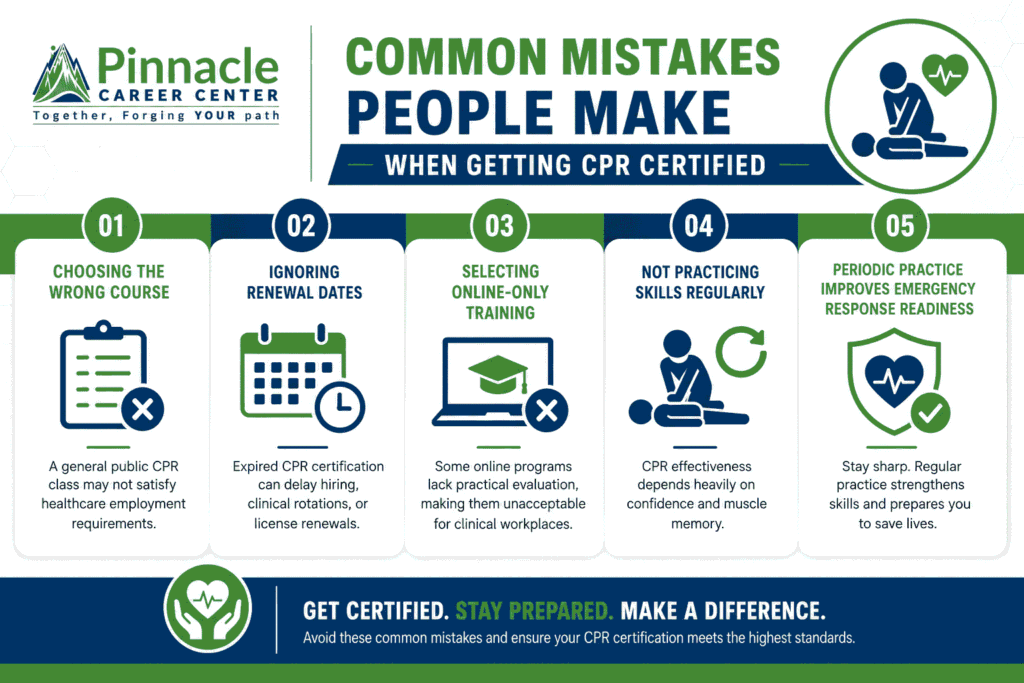
Choosing the Wrong Course
A general public CPR class may not satisfy healthcare employment requirements.
Ignoring Renewal Dates
Expired CPR certification can delay hiring, clinical rotations, or license renewals.
Selecting Online-Only Training
Some online programs lack practical evaluation, making them unacceptable for clinical workplaces.
Not Practicing Skills Regularly
CPR effectiveness depends heavily on confidence and muscle memory. Periodic practice improves emergency response readiness.
How to Choose the Right CPR Training Program
When selecting a CPR Course, consider more than price alone.
Look for:
- Experienced instructors
- Hands-on skills practice
- Employer-recognized certification
- Updated training guidelines
- Flexible scheduling
- Renewal support
- Positive student reviews
Training quality matters because real emergencies require practical competence, not just course completion.
CPR Certification for Healthcare Students
Students entering nursing, CNA, medical assistant, or allied health programs often need CPR certification before clinical training begins.
Healthcare students should usually choose:
- BLS certification
- Hands-on instruction
- Employer-approved providers
- Healthcare-focused emergency training
Programs like those offered by Pinnacle Career Center help students prepare for real-world healthcare environments where rapid emergency response skills are essential.
Some students specifically search for options like CPR Course san antino when comparing local training opportunities, but the most important factor is selecting a recognized provider that meets employer standards.
FAQs
How long is CPR certification valid?
Most CPR certifications are valid for two years before renewal is required.
Do healthcare workers need BLS instead of basic CPR?
Yes. Many healthcare employers require BLS certification because it includes advanced emergency response techniques and team-based care training.
Can I get CPR certified online?
Yes, but employer acceptance varies. Healthcare facilities often require in-person skills testing in addition to online coursework.
Is CPR certification difficult?
Most students successfully complete CPR training. The course focuses on practical, step-by-step emergency response skills rather than complex medical theory.
How quickly can I get CPR certified?
Many CPR courses can be completed in a single day, depending on the certification level and training format.
Final Thoughts
CPR certification is one of the most valuable professional and personal skills you can develop. Beyond meeting workplace requirements, it equips you to respond confidently during life-threatening emergencies when every second matters.
Whether you are pursuing a healthcare career, renewing an expired credential, or preparing for workplace compliance, choosing the right CPR training program makes a significant difference in both certification acceptance and real-world readiness.
Before enrolling, confirm employer requirements, verify hands-on training components, and select a trusted education provider committed to high-quality instruction and current emergency response standards.
Ready to Get CPR Certified?
Whether you are starting a healthcare career, renewing your credentials, or learning lifesaving emergency skills for personal preparedness, choosing the right CPR training program is an important step.
At Pinnacle Career Center, we provide hands-on CPR Course training designed to help students build confidence, meet certification requirements, and prepare for real-world emergency situations. Our experienced instructors, flexible scheduling options, and healthcare-focused training environment help students gain the practical skills employers value.
Take the next step toward becoming CPR certified and prepared to respond when it matters most.