

How to Become a Phlebotomy Technician?
Healthcare careers continue to grow in demand, and one of the fastest ways to enter the field is by becoming a phlebotomy technician. This role plays a critical part in patient care by collecting blood samples for testing, diagnosis, and treatment. If you are looking for a stable, hands-on career with minimal training time, phlebotomy may be the right path for you.
This guide will walk you through everything you need to know about how to become a phlebotomy technician, including education requirements, certification steps, training options, and career opportunities.
What Is a Phlebotomy Technician?
A phlebotomy technician is a trained healthcare professional responsible for drawing blood from patients. These samples are used for laboratory testing, blood donations, and medical research.
Phlebotomy technicians work in a variety of settings, including:
- Hospitals
- Diagnostic laboratories
- Clinics and physician offices
- Blood donation centers
- Nursing homes
In addition to drawing blood, they also ensure patient comfort, maintain sterile equipment, label samples correctly, and follow safety protocols.
Why Choose a Career in Phlebotomy?
Becoming a phlebotomy technician offers several benefits, especially for those starting a healthcare career.
Quick Entry Into Healthcare
Unlike many medical professions that require years of education, phlebotomy technician training can often be completed in a few weeks to a few months.
Strong Job Demand
Healthcare facilities consistently need skilled professionals to handle blood collection and testing procedures.
Affordable Training Options
Most phlebotomy technician classes are relatively affordable compared to other healthcare programs.
Career Growth Opportunities
Phlebotomy can serve as a stepping stone to advanced roles such as nursing, medical assisting, or laboratory technology.
Basic Requirements to Become a Phlebotomy Technician
Before enrolling in a phlebotomy technician course, you should meet some basic requirements.
Minimum Education
Most programs require a high school diploma or GED.
Age Requirement
You typically need to be at least 18 years old.
Background Check
Some training programs and employers require a background check.
Health Requirements
Proof of immunizations and a negative tuberculosis test may be required before starting clinical training.
Step by Step Guide to Becoming a Phlebotomy Technician
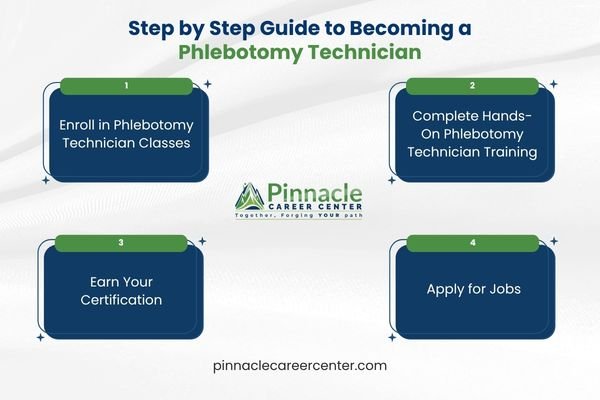
Step 1: Enroll in Phlebotomy Technician Classes
The first step is to enroll in a reputable phlebotomy technician training program. These programs are offered by community colleges, vocational schools, and healthcare training centers.
A quality phlebotomy technician course will include:
- Anatomy and physiology basics
- Blood collection techniques
- Infection control and safety procedures
- Patient interaction and communication
- Medical terminology
Choosing the right program is important because it prepares you for both the certification exam and real-world job responsibilities.
Step 2: Complete Hands-On Phlebotomy Technician Training
Hands-on experience is a key part of becoming a skilled phlebotomist. Most phlebotomy technician training programs include a clinical component where students practice drawing blood under supervision.
During this phase, you will learn how to:
- Perform venipuncture and capillary sticks
- Handle and label specimens correctly
- Follow proper hygiene and safety protocols
- Interact with patients professionally
This practical experience builds confidence and ensures you are job-ready.
Step 3: Earn Your Certification
While certification is not always legally required in every state, most employers prefer or require certified candidates.
Popular certification organizations include:
- National Healthcareer Association
- American Society for Clinical Pathology
- American Medical Technologists
To become certified, you will need to:
- Complete a recognized phlebotomy technician course
- Meet clinical experience requirements
- Pass a certification exam
Certification demonstrates your knowledge and skills, making you more competitive in the job market.
Step 4: Apply for Jobs
Once you complete your phlebotomy technician training and earn certification, you can start applying for jobs.
Common entry-level positions include:
- Hospital phlebotomist
- Lab assistant
- Blood bank technician
- Mobile phlebotomy technician
Many training programs also offer job placement assistance, which can help you find employment faster.
How Long Does It Take to Become a Phlebotomy Technician?
The timeline can vary depending on the program you choose.
- Short-term programs: 4 to 8 weeks
- Standard programs: 2 to 4 months
- Extended programs with clinical hours: up to 6 months
Compared to other healthcare careers, phlebotomy offers one of the fastest paths to employment.
What You Learn in a Phlebotomy Technician Course
A well-structured phlebotomy technician course covers both theoretical knowledge and practical skills.
Classroom Training
Topics usually include:
- Human anatomy and circulatory system
- Blood collection methods
- Infection prevention
- Medical terminology
- Legal and ethical practices
Clinical Training
This part focuses on real-world application, including:
- Performing blood draws on patients
- Handling different patient scenarios
- Using phlebotomy equipment
- Maintaining safety standards
Combining classroom instruction with clinical practice ensures a complete learning experience.
Online vs In-Person Phlebotomy Technician Classes
When choosing phlebotomy technician classes, you may have the option of online or in-person learning.
Online Programs
- Flexible scheduling
- Ideal for theory-based learning
- Requires in-person clinical training
In-Person Programs
- Hands-on practice in a classroom setting
- Direct interaction with instructors
- Better for skill development
Many students prefer hybrid programs that combine online coursework with in-person clinical training.
Cost of Phlebotomy Technician Training
The cost of a phlebotomy technician course can vary depending on the institution and location.
Average Costs
- Tuition: $700 to $3,000
- Certification exam fees: $100 to $200
- Supplies and materials: $50 to $300
Some schools offer financial assistance, payment plans, or scholarships to make training more accessible.
Skills Needed to Succeed as a Phlebotomy Technician
To excel in this field, certain skills are essential.
Attention to Detail
Accurate labeling and handling of blood samples is critical.
Communication Skills
You will interact with patients who may feel nervous or anxious.
Steady Hands
Drawing blood requires precision and control.
Compassion and Empathy
Providing reassurance helps patients feel comfortable during procedures.
Time Management
You may need to handle multiple patients efficiently.
Where Phlebotomy Technicians Work
After completing your phlebotomy technician training, you can explore a variety of work environments.
Hospitals
Fast-paced settings with diverse patient populations.
Diagnostic Laboratories
Focus on processing and analyzing blood samples.
Clinics
Provide routine blood testing services.
Blood Donation Centers
Assist donors and collect blood for transfusions.
Mobile Phlebotomy Services
Travel to patients’ homes or workplaces to collect samples.
Career Growth Opportunities
Starting as a phlebotomy technician can open doors to other healthcare careers.
Advanced Roles
- Medical laboratory technician
- Registered nurse
- Medical assistant
- Healthcare administrator
Many professionals use phlebotomy as a stepping stone to higher-paying roles in the medical field.
Tips for Choosing the Right Phlebotomy Technician Training Program
Selecting the right training program is key to your success.
Look for Accreditation
Ensure the program meets industry standards and is recognized by certification organizations.
Check Clinical Hours
Make sure the program includes enough hands-on practice.
Review Job Placement Support
Programs that offer career assistance can help you secure a job faster.
Compare Costs and Schedules
Choose a program that fits your budget and availability.
Is Phlebotomy Technician Training Worth It?
For many individuals, the answer is yes. Phlebotomy technician training is relatively short, affordable, and leads to a stable career in healthcare.
You gain valuable skills, enter a growing industry, and have the opportunity to make a real difference in patient care.
Final Thoughts
Learning how to become a phlebotomy technician is a practical step toward building a rewarding healthcare career. With the right phlebotomy technician classes, hands-on training, and certification, you can quickly transition into a role that is both meaningful and in demand.
Whether you are just starting out or looking to switch careers, enrolling in a quality phlebotomy technician course can set you on the path to success. Focus on choosing a program that offers strong clinical experience and prepares you for certification.